Showing posts with label news. Show all posts

December 13, 2018

The Indian Express Celebrates Ray's 97th Birthday


    Source:indianexpress.com
Written by Shivangi Jalan |New Delhi |Published: May 2, 2018 2:42:57 pm

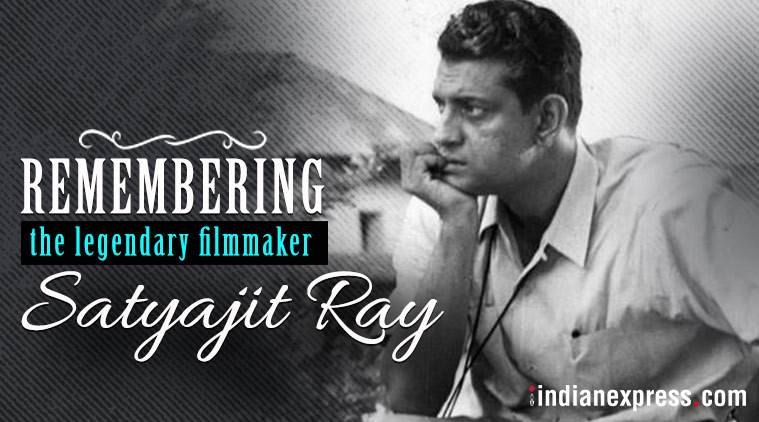
Interesting facts about the legendary filmmaker: Satyajit Ray on his 97th Birthday. 


Legendary filmmaker Satyajit Ray would have celebrated his 97th birthday today. The filmmaker not only played a major role in placing India on the global cinematic map but his works continue to inspire a number of acclaimed filmmakers even today. No wonder, acclaimed filmmakers like Christopher Nolan call Ray’s first film Pather Panchali one of the best films in the history of filmmaking. On his 97th birth anniversary, here’s looking at some interesting facts about Satyajit Ray’s life.

Fact No. 1. Satyajit Ray belonged to a family of writers. In his early life, Ray was a huge fan of Oriental art. His frequent visits to Ajanta, Ellora and Elephanta caves stimulated his love for Indian art. He had started his career as an illustrator working for different companies.
Fact No. 2. He was even assigned the job to design the cover for the children’s version of Pather Panchali, renamed as Aam Antir Bhepu. While illustrating the book, Ray got hugely influenced by the story and even made it the subject of his feature debut. Shots of his illustrations also featured in the film.
Fact No. 3. Only after getting introduced to French director Jean Renoir did Ray get especially interested in filmmaking. During his three-month stint in London, Satyajit Ray watched a staggering total of 99 films but among them, Ladri di biciclette (Bicycle Thieves) by Vittorio De Sica had the most profound impact on him. It is said that he walked out of the theatre determined to be a filmmaker.
Fact No. 4. Satyajit Ray’s first film Pather Panchali was shot for three years. Also, the film’s cast and crew were all rookies, making the shooting even more difficult.
Fact No. 5. Ray even struggled with the film’s funding for a long time as he was determined on not changing any part of the story or perspective to the whims of a producer. The budget was so shoe-string that Ray had to sell a lot of his personal belongings to complete the film. Only after taking a loan from the Bengal government, Ray was able to release the film in 1955. It went on to receive great critical and commercial success, not just in India but also globally.
Fact No. 6. For Aparajito, the second film of the Apu trilogy, much of the story is drawn from Satyajit Ray’s own experiences. For instance, Apu going to Calcutta and finding lodging with a printer echoes the young Satyajit Ray living above his grandfather’s printing press. 
Fact No. 7. Ray was also able to launch two industry stalwarts with his final Apu film, Apur Sansar. While Soumitra Chatterjee who played the grown-up Apu collaborated with Ray in almost every film he directed, Apu’s bride Aparna was played by the 14-year-old Sharmila Tagore.
Fact No. 8. After the famous Apu Trilogy, Satyajit Ray experimented with genres. He also went on to make films on the British Raj period, various documentaries including one on Rabindranath Tagore and even comedies like Mahapurush. His major films in this period include Charulata, Devi and Sandesh.
Fact No. 9. This might come as a shock to many but Ray had accused Steven Spielberg of borrowing the basic idea from his unrealised sci-fi film The Alien for his E.T. The Extra-Terrestrial. He went on record and said, “At least two of the Spielberg-Lucas films, Close Encounters of the Third Kind and ET, would not have been possible without my script of The Alien being available throughout America in mimeographed copies. Some days back Arthur Clark telephoned me from London, saying that I should file a copyright case and should not take it lying down.”
Fact No. 10. Satyajit Ray even delved into the genres of fantasy, science fiction, detective dramas and historical dramas in his later years. The Academy of Motion Picture Arts and Sciences awarded him an Honorary Academy Award in 1992. On April 23 in the same year, Ray breathed his last but his brilliant legacy sure lives on.

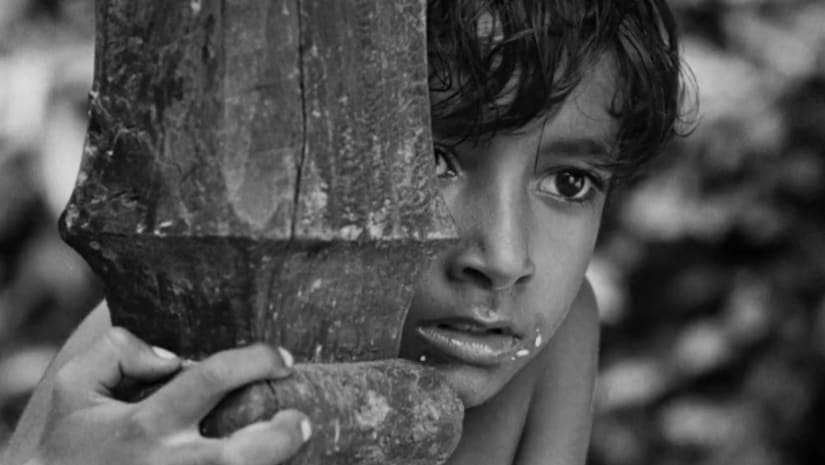


Pather Panchali - The only Indian movie in BBC's List of Best Foreign Films

Satyajit Ray’s 1955 film Pather Panchali is the only Indian film on the BBC’s list of the 100 best foreign-language films of the 21st century.


Source: Hindustan Times
Oct 31, 2018 15:56 IST


The BBC has unveiled their list of the 100 best foreign-language films of the 21st century. Over 200 critics from 43 countries took part in the poll, which judged Akira Kurosawa’s Seven Samurai as the number one film not in the English language.
The poll narrowed down 100 films from 67 different directors, from 24 countries, and in 19 languages. “27 of the highest-rated films were in French, followed by 12 in Mandarin, and 11 each in Italian and Japanese,” according to the BBC. However, only one Indian film has made it to the list, Satyajit Ray’s Pather Panchali, which was released in 1955 and placed at number 15 on the list.
The BBC noted that a quarter of the film’s listed were East Asian, but curiously, none of the six Japanese critics who took part voted for a single Kurosawa movie. Regrettably, the BBC admitted that only four of the 100 films have been directed by women. Although 45% of the critics who responded are women.

Here is the full list:
100. Landscape in the Mist (Theo Angelopoulos, 1988)
99. Ashes and Diamonds (Andrzej Wajda, 1958)
98. In the Heat of the Sun (Jiang Wen, 1994)
97. Taste of Cherry (Abbas Kiarostami, 1997)
95. Floating Clouds (Mikio Naruse, 1955)
94. Where Is the Friend’s Home? (Abbas Kiarostami, 1987)
93. Raise the Red Lantern (Zhang Yimou, 1991)
92. Scenes from a Marriage (Ingmar Bergman, 1973)
91. Rififi (Jules Dassin, 1955)
90. Hiroshima Mon Amour (Alain Resnais, 1959)
89. Wild Strawberries (Ingmar Bergman, 1957)
88. The Story of the Last Chrysanthemum (Kenji Mizoguchi, 1939)
87. The Nights of Cabiria (Federico Fellini, 1957)
86. La Jetée (Chris Marker, 1962)
85. Umberto D (Vittorio de Sica, 1952)
84. The Discreet Charm of the Bourgeoisie (Luis Buñuel, 1972)
83. La Strada (Federico Fellini, 1954)
82. Amélie (Jean-Pierre Jeunet, 2001)
81. Celine and Julie go Boating (Jacques Rivette, 1974)
80. The Young and the Damned (Luis Buñuel, 1950)
79. Ran (Akira Kurosawa, 1985)
78. Crouching Tiger, Hidden Dragon (Ang Lee, 2000)
77. The Conformist (Bernardo Bertolucci, 1970)
76. Y Tu Mamá También (Alfonso Cuarón, 2001)
75. Belle de Jour (Luis Buñuel, 1967)
74. Pierrot Le Fou (Jean-Luc Godard, 1965)
73. Man with a Movie Camera (Dziga Vertov, 1929)
72. Ikiru (Akira Kurosawa, 1952)
71. Happy Together (Wong Kar-wai, 1997)
70. L’Eclisse (Michelangelo Antonioni, 1962)
69. Amour (Michael Haneke, 2012)
68. Ugetsu (Kenji Mizoguchi, 1953)
67. The Exterminating Angel (Luis Buñuel, 1962)
66. Ali: Fear Eats the Soul (Rainer Werner Fassbinder, 1973)
65. Ordet (Carl Theodor Dreyer, 1955)
64. Three Colours: Blue (Krzysztof Kieślowski, 1993)
63. Spring in a Small Town (Fei Mu, 1948)
62. Touki Bouki (Djibril Diop Mambéty, 1973)
61. Sansho the Bailiff (Kenji Mizoguchi, 1954)
60. Contempt (Jean-Luc Godard, 1963)
59. Come and See (Elem Klimov, 1985)
58. The Earrings of Madame de… (Max Ophüls, 1953)
57. Solaris (Andrei Tarkovsky, 1972)
56. Chungking Express (Wong Kar-wai, 1994)
55. Jules and Jim (François Truffaut, 1962)
54. Eat Drink Man Woman (Ang Lee, 1994)
53. Late Spring (Yasujirô Ozu, 1949)
52. Au Hasard Balthazar (Robert Bresson, 1966)
51. The Umbrellas of Cherbourg (Jacques Demy, 1964)
50. L’Atalante (Jean Vigo, 1934)
49. Stalker (Andrei Tarkovsky, 1979)
48. Viridiana (Luis Buñuel, 1961)
47. 4 Months, 3 Weeks and 2 Days (Cristian Mungiu, 2007)
46. Children of Paradise (Marcel Carné, 1945)
45. L’Avventura (Michelangelo Antonioni, 1960)
44. Cleo from 5 to 7 (Agnès Varda, 1962)
43. Beau Travail (Claire Denis, 1999)
42. City of God (Fernando Meirelles, Kátia Lund, 2002)
41. To Live (Zhang Yimou, 1994)
40. Andrei Rublev (Andrei Tarkovsky, 1966)
39. Close-Up (Abbas Kiarostami, 1990)
38. A Brighter Summer Day (Edward Yang, 1991)
37. Spirited Away (Hayao Miyazaki, 2001)
36. La Grande Illusion (Jean Renoir, 1937)
35. The Leopard (Luchino Visconti, 1963)
34. Wings of Desire (Wim Wenders, 1987)
33. Playtime (Jacques Tati, 1967)
32. All About My Mother (Pedro Almodóvar, 1999)
31. The Lives of Others (Florian Henckel von Donnersmarck, 2006)
30. The Seventh Seal (Ingmar Bergman, 1957)
29. Oldboy (Park Chan-wook, 2003)
28. Fanny and Alexander (Ingmar Bergman, 1982)
27. The Spirit of the Beehive (Victor Erice, 1973)
26. Cinema Paradiso (Giuseppe Tornatore, 1988)
25. Yi Yi (Edward Yang, 2000)
24. Battleship Potemkin (Sergei M Eisenstein, 1925)
23. The Passion of Joan of Arc (Carl Theodor Dreyer, 1928)
22. Pan’s Labyrinth (Guillermo del Toro, 2006)
21. A Separation (Asghar Farhadi, 2011)
20. The Mirror (Andrei Tarkovsky, 1974)
19. The Battle of Algiers (Gillo Pontecorvo, 1966)
18. A City of Sadness (Hou Hsiao-hsien, 1989)
17. Aguirre, the Wrath of God (Werner Herzog, 1972)
16. Metropolis (Fritz Lang, 1927)
15. Pather Panchali (Satyajit Ray, 1955)
14. Jeanne Dielman, 23 Commerce Quay, 1080 Brussels (Chantal Akerman, 1975)
13. M (Fritz Lang, 1931)
12. Farewell My Concubine (Chen Kaige, 1993)
11. Breathless (Jean-Luc Godard, 1960)
10. La Dolce Vita (Federico Fellini, 1960)
9. In the Mood for Love (Wong Kar-wai, 2000)
8. The 400 Blows (François Truffaut, 1959)
7. 8 1/2 (Federico Fellini, 1963)
6. Persona (Ingmar Bergman, 1966)
5. The Rules of the Game (Jean Renoir, 1939)
4. Rashomon (Akira Kurosawa, 1950)
3. Tokyo Story (Yasujirô Ozu, 1953)
2. Bicycle Thieves (Vittorio de Sica, 1948)
1. Seven Samurai (Akira Kurosawa, 1954)
In their recent list of the top 100 American films, the BBC had named Citizen Kane at the number one spot, followed by The Godfather, Vertigo, 2001: A Space Odyssey and The Searchers.

May 11, 2011

Satyajit Ray films still the most popular in Bengal


Source: TOI
KOLKATA: Nineteen years after Satyajit Ray breathed his last in 1992 at the age of 70, cine buffs in the city continue to mourn the passing away of the legendary director. Though contemporary Bengali cinema has come of age in recent years with interesting scripts and competent direction, movie-goers continue to miss Ray's midas tough.
On the sidelines of a function organized by Ekhon Satyajit—a publication dedicated on Ray's films and film-making techniques—to commemorarte Ray's 90th birth anniversary, magazine editor Somnath Roy felt Ray would be a near impossible task to beat. Ray was as popular in India as abroad with his movies winning accolades at all major film festivals including Cannes. He was conferred an honorary Academy Award for lifetime achievement in cinema a month before he died.
"What sets Ray apart from other film-makers like Ritwik Ghatak and Mrinal Sen is the simplicity of narrative form, consistency of subject choice and great cinematography. His frames were so powerful that they get etched in memory. Today's movies are technically a lot improved. Some of the alternate films have good scripts. Others have sparkling cinematography. But overall, the harmony that one gets to sense in a Ray movie is missing," said Roy.
During his career as a film-maker spanning 1955-1991, Ray made 26 feature films, 5 documentaries and 2 short films. Each of them is heralded as a classic and remain as popular today with audiences never failing to attend Ray retrospectives. Among them were the Apu trilogy (Pather Panchali, Aparajito and Apur Sansar ), Devi, Kanchenjungha, Mahanagar, Charulata, Nayak, Goopy Gyne Bagha Byne, Aranyer Din Ratri, Seemabaddha, Asani Sanket, Sonar Kella, Jana Aranya, Shatranj Ke Khilari, Ghare Baire and Agantuk.
Ace photographer Nimai Ghosh, whom Ray had called 'a Boswell working with a camera rather than a pen' and had captured the master in action from 1967 till his death in 1992, is still in awe of the film-maker. "I was in a trance all those years and did it purely out of my admiration for Ray. I was star-struck and in awe of him till the last. I would click him relentlessly and often I would be unhappy with the frames. But I would keep taking his photos for I couldn't stop myself," recalled Ghosh.
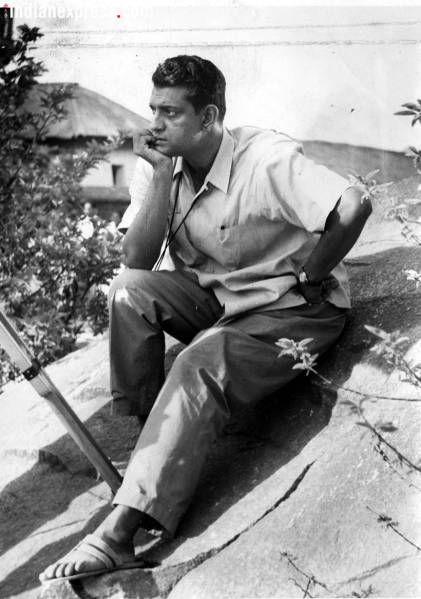
He took more than 80,000 photographs of Ray, which almost graphically depict his life and work. Like the one in which Ray is perched on a rock during an outdoor shoot and another which shows the master in an animated discussion with his actors at a script-reading session. Such is the popularity of Ray that Ghosh's book of black & white photographs on the maestro that was released a couple of days ago, has been a sell-out.