Source:indianexpress.com
Written by Shivangi Jalan |New Delhi |Published: May 2, 2018 2:42:57 pm
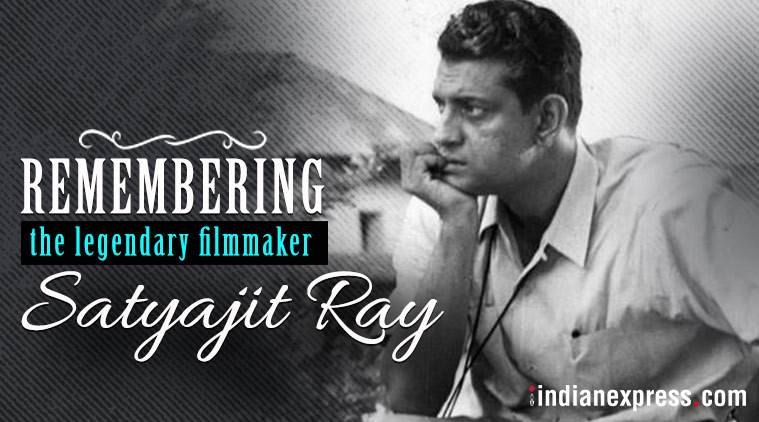
Interesting facts about the legendary filmmaker: Satyajit Ray on his 97th Birthday.
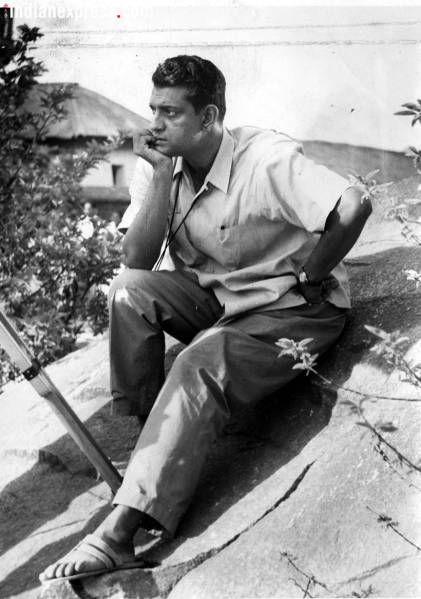
Legendary filmmaker Satyajit Ray would have celebrated his 97th birthday today. The filmmaker not only played a major role in placing India on the global cinematic map but his works continue to inspire a number of acclaimed filmmakers even today. No wonder, acclaimed filmmakers like Christopher Nolan call Ray’s first film Pather Panchali one of the best films in the history of filmmaking. On his 97th birth anniversary, here’s looking at some interesting facts about Satyajit Ray’s life.
Fact No. 1. Satyajit Ray belonged to a family of writers. In his early life, Ray was a huge fan of Oriental art. His frequent visits to Ajanta, Ellora and Elephanta caves stimulated his love for Indian art. He had started his career as an illustrator working for different companies.
Fact No. 2. He was even assigned the job to design the cover for the children’s version of Pather Panchali, renamed as Aam Antir Bhepu. While illustrating the book, Ray got hugely influenced by the story and even made it the subject of his feature debut. Shots of his illustrations also featured in the film.
Fact No. 3. Only after getting introduced to French director Jean Renoir did Ray get especially interested in filmmaking. During his three-month stint in London, Satyajit Ray watched a staggering total of 99 films but among them, Ladri di biciclette (Bicycle Thieves) by Vittorio De Sica had the most profound impact on him. It is said that he walked out of the theatre determined to be a filmmaker.
Fact No. 4. Satyajit Ray’s first film Pather Panchali was shot for three years. Also, the film’s cast and crew were all rookies, making the shooting even more difficult.
Fact No. 5. Ray even struggled with the film’s funding for a long time as he was determined on not changing any part of the story or perspective to the whims of a producer. The budget was so shoe-string that Ray had to sell a lot of his personal belongings to complete the film. Only after taking a loan from the Bengal government, Ray was able to release the film in 1955. It went on to receive great critical and commercial success, not just in India but also globally.
Fact No. 6. For Aparajito, the second film of the Apu trilogy, much of the story is drawn from Satyajit Ray’s own experiences. For instance, Apu going to Calcutta and finding lodging with a printer echoes the young Satyajit Ray living above his grandfather’s printing press.
Fact No. 7. Ray was also able to launch two industry stalwarts with his final Apu film, Apur Sansar. While Soumitra Chatterjee who played the grown-up Apu collaborated with Ray in almost every film he directed, Apu’s bride Aparna was played by the 14-year-old Sharmila Tagore.
Fact No. 8. After the famous Apu Trilogy, Satyajit Ray experimented with genres. He also went on to make films on the British Raj period, various documentaries including one on Rabindranath Tagore and even comedies like Mahapurush. His major films in this period include Charulata, Devi and Sandesh.
Fact No. 9. This might come as a shock to many but Ray had accused Steven Spielberg of borrowing the basic idea from his unrealised sci-fi film The Alien for his E.T. The Extra-Terrestrial. He went on record and said, “At least two of the Spielberg-Lucas films, Close Encounters of the Third Kind and ET, would not have been possible without my script of The Alien being available throughout America in mimeographed copies. Some days back Arthur Clark telephoned me from London, saying that I should file a copyright case and should not take it lying down.”
Fact No. 10. Satyajit Ray even delved into the genres of fantasy, science fiction, detective dramas and historical dramas in his later years. The Academy of Motion Picture Arts and Sciences awarded him an Honorary Academy Award in 1992. On April 23 in the same year, Ray breathed his last but his brilliant legacy sure lives on.